Blog / Case study
Saboor built Peter Alkema a course desk so a new Udemy lesson does not start from a blank page
26 August 2026
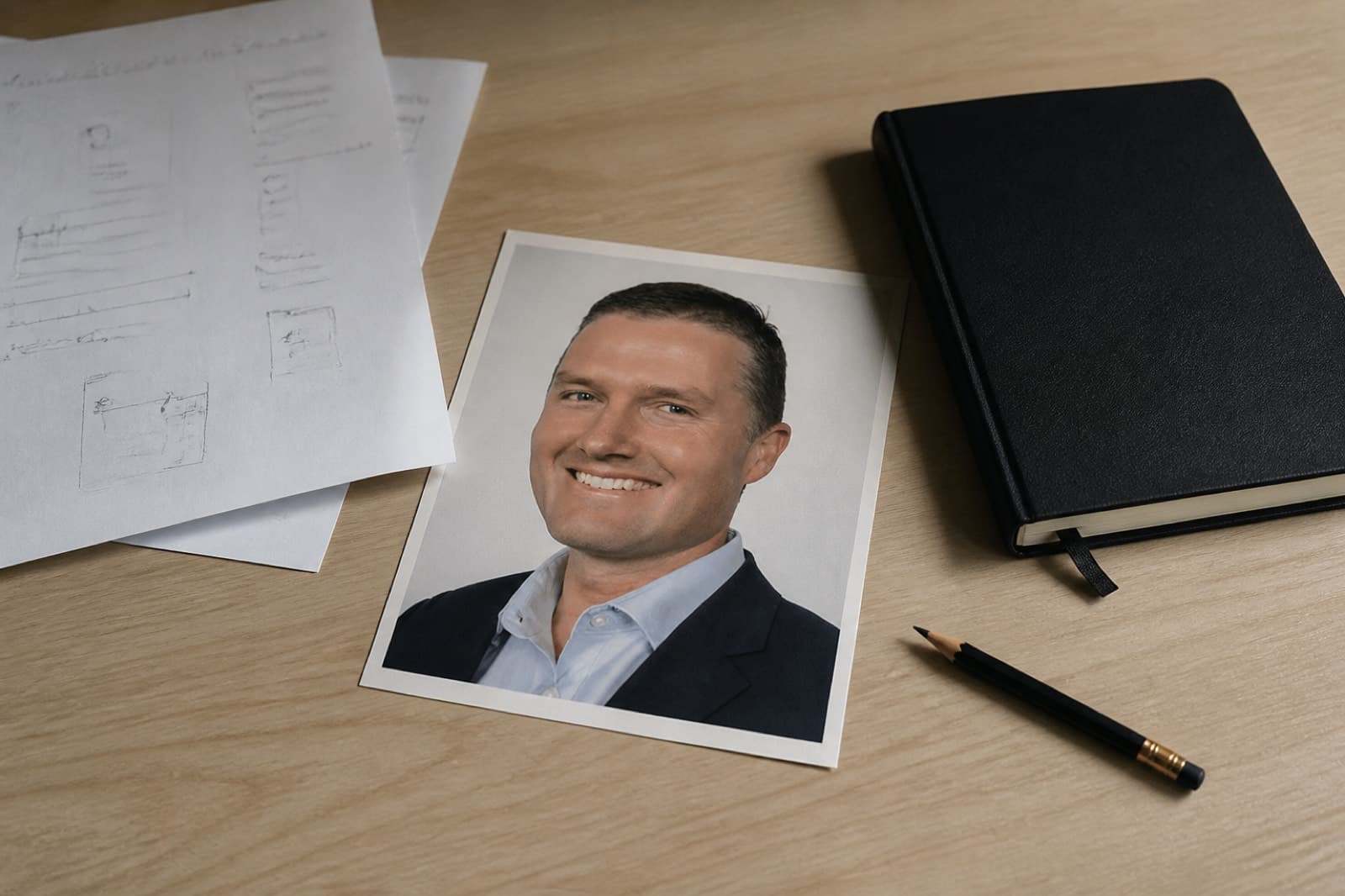
Peter Alkema teaches on Udemy while holding a full executive job. He is Head of IS Technology and Platforms at ABB, after years as Business Banking CIO at FNB and later digital transformation work across FirstRand. He has a PhD from Wits on how senior leadership changes Agile teams, and in 2016 he was named Visionary CIO of the Year in South Africa. His public catalogue covers Agile leadership, digital disruption, no-code automation, and how businesses actually use models like ChatGPT. The problem he brought us was not “make me an instructor.” He already was one. The problem was throughput.
A new course used to mean a script, a recording day, stills, a PDF, and a quiz bank, each sitting in a different tool and waiting on Peter. Saboor Islam built the production desk from scratch so that path could start from an outline and finish as files Peter still owns. Peter runs that desk himself now. We do not sit in the publish button.
What the desk actually makes
The outline is the source. From there the desk drafts lesson scripts, still frames, slide-like images, a PDF workbook, and multiple-choice questions. Voice is part of the same path: a script becomes a voiced take that can be cut into a lesson video. None of that is a one-click “course.” Each step has a place where Peter can reject the draft, rewrite a line, or record the take again.
That last part is the whole point. A model will happily voice a sentence that is wrong, or write a quiz answer that is almost right. If you publish that, you have made the model the instructor. Peter is the instructor. The desk is a factory floor with stops.
Voice, picture, and the quiz have to agree
The failure we kept hitting in the first builds was drift. The voice said one number. The still showed another. The quiz asked a third. Saboor put checks between those steps so a lesson cannot move forward if the script, the frame, and the questions disagree. When they disagree, the desk stops and shows the three versions on one screen.
We also kept a branch for “Peter records this himself.” Some lessons should stay in his voice from the first take. The automation prepares the script and the stills. It does not pretend a generated voice is the same as the person students enrolled to hear.
What he has after we leave
He can raise a new course from an outline without booking us. Videos, stills, PDFs, and quizzes come out of the same desk. He can still walk every lesson the way he walked a bank programme: look at the exception, not only the happy path. If a quiz item feels cheap, he kills it. If a voiced line sounds like a brochure, he records it again.
That is the version of automation we will sell you. The person who already knows the subject keeps the last say. The machine does the copying, the assembly, and the boring render. If you want a catalogue that publishes while you sleep and nobody reads it, we are the wrong shop.